Leadership Training for Business Boost Your Team’s Skills
83% of organizations expect new leadership skills will be critical soon, according to the 2025 Global Leadership Forecast. This makes choosing the right path to develop your managers urgent and practical.
We offer a clear, actionable approach that helps leaders gain real-world skills fast. Our methods pair coaching with hands-on experience and timely feedback to speed up learning.
Investing in focused programs saves time and builds confidence. Managers learn to handle daily operations and long-term goals with fewer roadblocks.
When you prioritize consistent development, your team sees steady gains in skill and morale. We provide varied formats and ongoing support so each leader can grow where they need it most.
The Strategic Importance of Leadership Development
Investing in focused development readies your organization to handle fast-changing skill needs. This is vital given that 83% of organizations expect new capabilities soon.
| Item Name | Description | Calories | Price |
|---|---|---|---|
| Starter Workshop | Hands-on sessions to build core skills | 0 | $1,200 |
| Mentor Program | Pairing new managers with senior leaders | 0 | $2,500 |
| Strategic Lab | Real projects to practice decision-making | 0 | $3,800 |
| Ongoing Coaching | Regular feedback and performance checks | 0 | $1,000/mo |
Prioritizing development helps close the 83% gap the forecast describes. When leaders gain clear, usable skills, the whole team acts with more purpose.
- Identify talent: targeted programs spot future leaders early.
- Align daily work: managers match actions to organizational goals.
- Retain high performers: invested employees stay longer and contribute more.
Essential Considerations for Selecting Leadership Training for Business
Choosing the right program means matching content to the real challenges your managers face day to day.
Assess curriculum relevance: Look for a course that ties lessons to your organization’s goals. The best options show clear scenarios and tools that leaders can use the same week.
Balance cost and quality: Higher price does not always mean better results. Evaluate expected outcomes, time to impact, and how the course measures learning.
Practical checks
- Does the class include safe, structured feedback so every person can practice without fear?
- Are instructors experienced and able to translate research into real workplace coaching?
- Does the program offer personalized attention and measurable results?
| Item Name | Description | Calories | Price |
|---|---|---|---|
| Curriculum Audit | Match learning objectives to job roles | 0 | $500 |
| Pilot Course | Short class to test real-time application | 0 | $1,000 |
| Instructor Review | Assess facilitator experience and methods | 0 | $750 |
| Outcome Check | Measure learning, feedback, and team impact | 0 | $300 |
Focus on research-based learning and a clear path to on-the-job use. That approach helps leaders gain durable skills and delivers real results.
Evaluating Top-Tier Executive Leadership Programs
Top executive programs distill complex strategy into clear decision tools that senior teams can use immediately.
Compare scope and outcomes before enrolling. The American Management Association offers 64 distinct programs aimed at strategic thinking and role readiness.
Focusing on Strategic Decision-Making
Babson’s Owning Your Leadership course shows how better collaboration can reclaim over 20% of a team’s time. That is a measurable boost in capacity.
Dale Carnegie’s approach centers on five core drivers that help managers set clear performance goals. Harvard’s Division of Continuing Education adds 20 interactive courses that use inquiry and self-assessment to fine-tune judgment.
- Match each course to specific roles and real challenges.
- Confirm the program offers frequent feedback and practical exercises.
- Look for clear metrics that show impact on teams and culture.
| Item Name | Description | Calories | Price |
|---|---|---|---|
| AMA Strategic Series | 64 programs on strategy and governance | 0 | $4,000 |
| Babson Owning Your Leadership | Time-reclaiming collaboration techniques | 0 | $2,200 |
| Dale Carnegie Leadership | 5 Drivers of performance goal setting | 0 | $1,800 |
| Harvard Executive Labs | 20 interactive programs with self-assessment | 0 | $5,500 |
Specialized Training for Emerging and New Managers
Focused programs give new leaders the tools and coaching they need to lead teams with calm and clarity.
Manager Bootcamp is an eight-week course with four modules, short video lessons, and a personal coaching call with creator Cecilia Gorman. It blends practical tasks with one-on-one feedback to speed skill growth.
EdX’s “Becoming a Successful Leader” serves as an introductory class for low-level managers. The class teaches accountability, courage, and basic decision skills that new leaders use daily.
- Short video lessons and practical exercises fit busy schedules and increase retention.
- Modules cover self-awareness and social awareness, which strengthen team cohesion.
- Personal coaching and support help managers apply lessons on the job.
| Item Name | Description | Calories | Price |
|---|---|---|---|
| Manager Bootcamp | Eight-week program with modules, videos, and personal coaching | 0 | $1,600 |
| EdX Intro Class | Foundational course teaching accountability and courage | 0 | $99 |
| Micro-Lessons Pack | Short lessons on communication and team-building | 0 | $250 |
| Coaching Add-On | Monthly one-on-one calls to reinforce learning | 0 | $400/mo |
Targeted courses help new managers develop leadership skills quickly. Investing in these programs builds a reliable pipeline of capable leaders who can guide your organization forward.
Leveraging Remote and Digital Learning Formats
Online learning puts practical lessons into the hands of managers wherever they are. These formats remove travel barriers and let teams access targeted content on their schedules.
Benefits of Virtual Classrooms
Virtual classes give flexibility and immediate impact. A three-hour Udemy course like “Managing Remote Teams” covers social-emotional needs in short sessions.
Short modules reduce time away from work while delivering focused course content. That makes it easier to track progress and measure success.
Mastering Remote Team Dynamics
Remote dynamics demand strong communication and emotional intelligence. LinkedIn Learning’s “Body Language for Authentic Leadership” helps leaders show presence even on video calls.
- Practical lessons: apply techniques the same week to improve team performance.
- Varied formats: on-demand classes, live virtual labs, and micro-lessons suit different learning levels.
- Support and coaching: combine class content with short coaching check-ins to reinforce change.
| Item Name | Description | Calories | Price |
|---|---|---|---|
| Udemy – Managing Remote Teams | 3-hour on-demand course on social-emotional remote leadership | 0 | $49 |
| LinkedIn – Body Language | 35-minute course on presence and connectional intelligence | 0 | $29 |
| Micro-Lessons Pack | Short, role-specific modules to practice communication | 0 | $250 |
| Coaching Add-On | Monthly coaching calls to embed lessons into daily work | 0 | $400/mo |
Building an Effective In-House Leadership Pipeline
A repeatable development path gives high-potential staff the skills they need at each career level.
With 86% of companies naming developing new leaders as a top talent challenge, an internal pipeline is essential. A structured program helps you spot talent, teach role-specific skills, and keep people motivated.
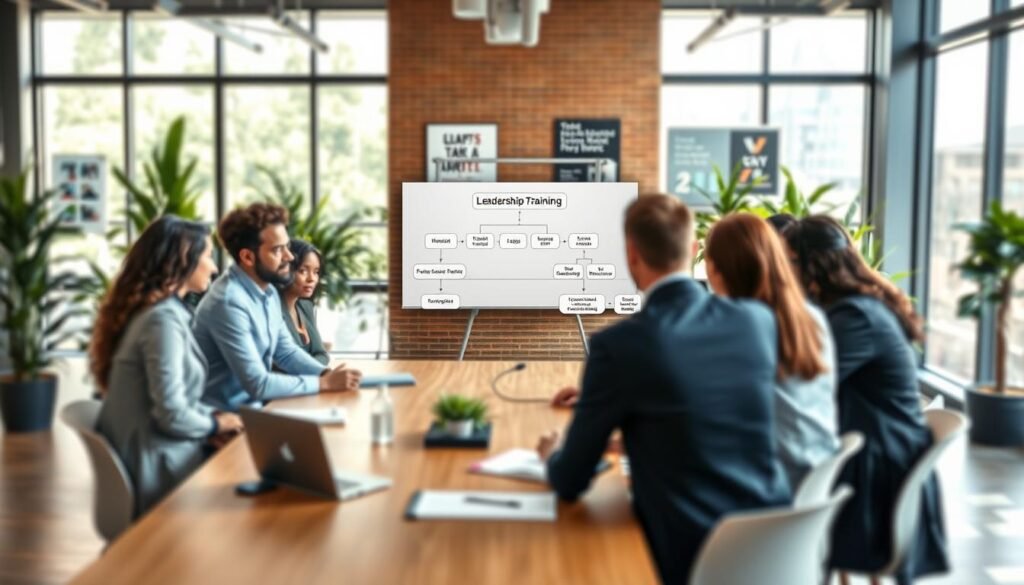
We help you design a stepped plan that moves people from contributor to leader. That approach limits disruption and cuts external hiring costs.
- Identify talent: early signals and simple assessments spotlight high-potential staff.
- Coach in-role: short practical modules and mentor pairings speed skill acquisition.
- Measure impact: clear milestones show who is ready for greater responsibility.
| Item Name | Description | Calories | Price |
|---|---|---|---|
| Curriculum Map | Role-based milestones and lesson plan | 0 | $750 |
| Mentor Pairing | Senior leader mentorship with checkpoints | 0 | $1,200 |
| Role Labs | Simulated projects to practice new duties | 0 | $1,800 |
| Outcome Metrics | Tracking impact on retention and promotion rates | 0 | $400 |
Measuring the Return on Investment for Your Training Programs
When you attach numbers to outcomes, professional development becomes a clear investment. Start with a simple plan that ties training to specific goals, then collect consistent data over time.
Key Performance Indicators for Success
Focus on a mix of behavior and business KPIs. Use short surveys, performance metrics, and project outcomes to capture real change.
- Completion to application rate: percent who apply skills within 30 days.
- Manager growth score: progress on role-based milestones and coaching notes.
- Team impact: productivity, retention, and goal attainment shifts.
- Feedback quality: qualitative comments from every person who finishes a course.
| Item Name | Description | Calories | Price |
|---|---|---|---|
| Outcome Survey | Measure application of new skills within 30 days | 0 | $300 |
| Manager Growth Check | Role milestones + coaching review | 0 | $600 |
| Impact Audit | Assess team results and retention changes | 0 | $900 |
Programs inspired by Dale Carnegie leadership methods often pair short courses with measurable follow-up. We help build systems that track long-term impact, supply clear feedback, and justify investment to stakeholders.
Aligning Organizational Culture with Leadership Goals
Aligning your culture with clear goals turns intentions into everyday actions across teams.
When culture and goals match, you get consistent behavior from every manager. We help you develop leadership skills tied to your company’s core values. That makes each course and coaching moment meaningful.

Start by mapping the exact skills your organization needs. Then embed those skills into training programs so leaders know what to practice and why. This creates transparency and stronger teamwork.
- Unify vision: make goals visible and measurable.
- Tie skills to values: link daily actions to mission statements.
- Promote accountability: short check-ins keep progress real.
| Item Name | Description | Calories | Price |
|---|---|---|---|
| Culture Audit | Assess gaps between stated values and daily actions | 0 | $650 |
| Skills Mapping | Identify role-specific skills tied to strategic goals | 0 | $850 |
| Aligned Course Pack | Short courses that reinforce core values on the job | 0 | $1,400 |
| Impact Check | Measure adoption, engagement, and team outcomes | 0 | $400 |
Result: a sustainable model where leaders act in ways that support long-term goals and keep teams engaged.
Conclusion
A clear end goal and steady practice turn course lessons into real workplace results.
Investing in high-quality leadership training programs prepares new leaders to meet modern challenges. Pick short courses with measurable milestones and real tasks so learning sticks.
Well-run training programs deliver clear results: stronger managers, better communication, and a more resilient organization. Explore our recommended options to match courses to your team’s needs.
We’re ready to help you build a reliable pipeline of talent that drives long-term success. Start by choosing a focused leadership training program and commit to ongoing development today.
FAQ
What outcomes should I expect from leadership development programs?
You should see clearer decision-making, stronger team communication, improved goal alignment, and measurable performance gains such as faster project delivery or higher employee engagement. Look for programs that include follow-up coaching and practical assignments so new skills transfer to everyday work.
How do I choose the right program for new managers?
Start by matching course content to the manager’s role and gaps: people management, feedback skills, and project oversight are common needs. Check for experiential learning, peer cohorts, and short modules that fit busy schedules. Ask about assessments and post-course coaching to ensure sustained development.
Are virtual classrooms effective compared to in-person courses?
Yes—when well designed. Virtual formats offer flexibility and wider access but need strong facilitation, interactive tools, and breakouts to build skills. Choose programs with live sessions, practical assignments, and opportunities for real-time feedback to maintain engagement and impact.
What metrics should we track to measure program ROI?
Key indicators include participant engagement, behavioral change (360 feedback or manager observations), team performance metrics, retention rates, and business outcomes tied to goals. Combine qualitative feedback with hard measures like productivity or sales to quantify impact.
How do we build an internal pipeline for developing leaders?
Create a clear competency framework, offer progressive skill-building courses, pair high-potential staff with mentors, and provide stretch assignments. Regular talent reviews and succession planning help keep the pipeline active and aligned with organizational goals.
What should we consider when evaluating executive programs from top schools?
Look at faculty expertise, curriculum depth in strategy and decision-making, alumni networks, and customizability to your context. Also review case studies, participant profiles, and post-program support such as coaching or peer cohorts to sustain learning.
How can training support cultural change in our organization?
Use programs that embed your values and real scenarios, involve senior leaders as sponsors, and align learning goals with performance expectations. Reinforce change with on-the-job practices, recognition, and consistent messaging to create lasting cultural shifts.
What are the benefits of coaching and feedback as part of development?
Coaching accelerates skill adoption by addressing real challenges, while structured feedback highlights blind spots and progress. Together they increase self-awareness, motivation, and the likelihood that new behaviors stick.
Which types of courses work best for different organizational levels?
Short, practical workshops suit frontline managers; blended programs with simulations fit mid-level leaders; and intensive executive programs with strategic focus suit senior leaders. Tailor content, duration, and delivery to role complexity and time availability.